


In the digitalizing business world, we are passing through a period where traditional retail methods are rapidly leaving their place to digital channels. Today, opening an online store means much more than just uploading products to a website. Behind a successful digital operation lies complex software systems working in perfect harmony with each other in the background. At this point, e-commerce integrations, which form the heart of modern digital commerce, come into play. Integrations are technological bridges that enable your website to communicate with critical external service providers in real time.
It is not possible for an e-commerce platform alone to meet all operational needs. From payment systems to cargo tracking, user analysis to security protocols, different external services must be used for each area of expertise. Connecting these services to your website through API (Application Programming Interface) technology reduces manual workload to zero. For example, when a customer shops on your site, the fact that the order information is instantly transferred to the shipping system, the payment is transferred to the bank pool, and an information message is sent to the customer is entirely thanks to this technological infrastructure.
Providing automation in e-commerce processes directly increases the operational efficiency of businesses. Preventing manual data entry eliminates human errors while saving significant time and cost. A well-configured integration ecosystem helps your business overcome bottlenecks encountered during the growth stage (scalability). If you want to offer your customers a seamless, fast, and reliable shopping experience, it is a critical necessity to build your digital store's infrastructure on these integrated systems.
The most critical stage of an e-commerce site is undoubtedly the payment step. The payment page that customers encounter after confirming their shopping cart must work both extremely securely and quickly. Virtual POS (Point of Sale) integrations are structures that securely receive the customer's credit or debit card information, transmit it to the relevant banking systems, and complete the approval process in seconds. The complete and error-free operation of these integrations directly affects your sales conversion rates.
Modern payment integrations must be developed in accordance with international security standards called PCI-DSS (Payment Card Industry Data Security Standard). These standards guarantee that card information is transmitted encrypted and is never kept as open source on servers. In addition, integrating additional security layers such as 3D Secure into the system protects both the business and the cardholder against potential unauthorized transaction risks. Offering different payment options to users and being able to manage single payment or installment options flexibly are also among the advantages offered by this infrastructure.
Offering payment solutions best suited to your business needs, our e-commerce software solution allows you to manage all these complex financial processes from a single center. Thanks to secure payment gateways, your customers enter their card information without worry, while you can instantly track the collection of successful orders. Minimizing friction in payment steps is the most effective way to reduce cart abandonment rates.
The most important link where e-commerce touches the physical world is the logistics and delivery process. The process from the product leaving the warehouse to reaching the customer's door must be managed transparently, quickly, and without errors. Cargo integrations transfer the information of the orders placed on your website directly to the database of the logistics company. In this way, the obligation to manually prepare a shipping label, write address information, or create a tracking number for each order is eliminated.
The process works like this: When the customer completes the order, the system automatically generates a unique shipping barcode in the background. This barcode is directly synchronized with the shipping company's system. When the warehouse worker packs the product and sticks this barcode on it, as soon as the cargo courier scans the barcode, all sender and receiver information is automatically processed into the system. At the same time, the generated tracking number is fed back to your e-commerce site and reflected on the customer's panel.
This automatic information flow directly boosts customer satisfaction. Customers can monitor every movement of their packages live through their own panels or via notifications sent to them, without needing to ask "Where is my cargo?". This transparency in logistics processes reduces the workload on your customer support team and allows your business to focus on more strategic areas.
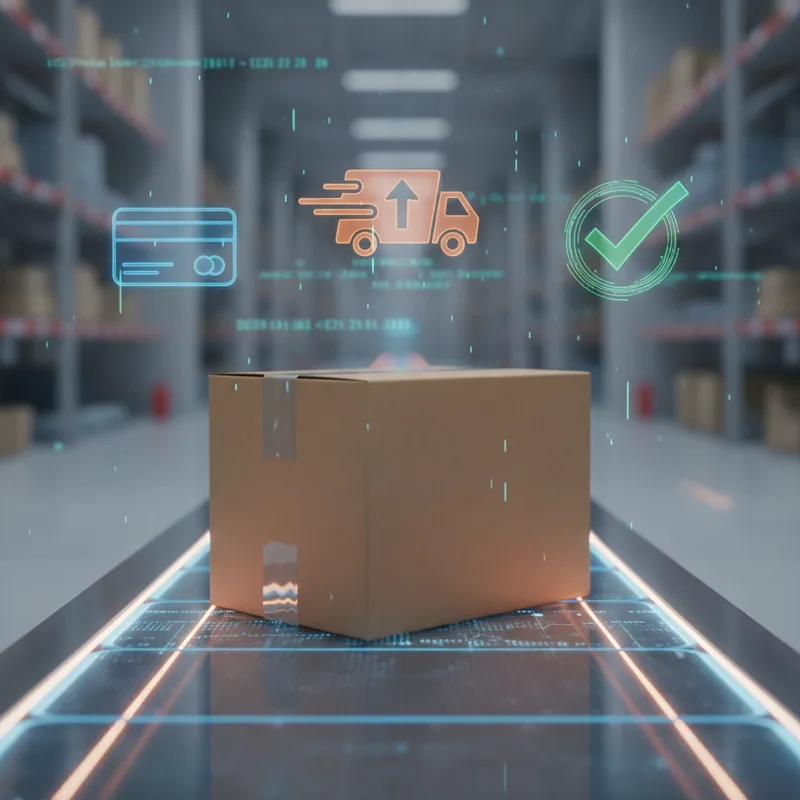
The way to strengthen customer relationships and create a loyal audience is through continuous and accurate communication. In e-commerce, notification system integrations are used to send instant and automatic updates to users about the status of their orders. SMS and email (transactional email) integrations are the most basic tools of this communication. When a customer registers on your site, places an order, their payment is approved, or their product is shipped, these systems are triggered to send automated messages.
Notification integrations play a major role not only for informational purposes but also in marketing and customer recovery processes. For example, sending an automated reminder email after a certain period to users who left products in their cart and did not complete the purchase significantly reduces lost sales rates. The fully automated operation of such scenarios lightens the workload of marketing teams to manually set up campaigns.
In order for notifications to arrive on time and without any problems, APIs of global and local SMS/email providers with high deliverability rates are integrated into the system. Incorrectly configured notification systems can cause sent emails to fall into the spam folder. This situation both damages the brand image and disrupts customer communication. A professional infrastructure ensures that all these notifications reach their destination securely over safe servers.
Data-driven decision-making is the most important element of modern e-commerce management. Knowing the behavior of users visiting your website, how much time they spend on which pages, which products they review, and which ones they add to their cart allows you to optimize your sales strategies. Analytics integrations collect this data through special tracking pixels and tracking codes added to your website's code structure and turn them into meaningful reports.
Integrating basic analytics tools such as Google Analytics, Google Search Console, and Meta Pixel into your e-commerce site is essential for managing your advertising budgets correctly. Thanks to these integrations, you can calculate exactly how much revenue you generate from which advertising campaign (ROAS - Return on Ad Spend) down to the penny. By analyzing which categories receive more interest, you can shape your inventory planning according to this data.
The most important point to consider during the integration process of analytics tools is to place the codes in a way that does not adversely affect the opening speed of the website. Unnecessarily or incorrectly added script codes can cause your site to slow down and therefore users to leave the site immediately (bounce rate). For this reason, it is recommended to use professional tag management systems that ensure all tracking codes are loaded asynchronously.
Today, more than 70% of e-commerce traffic comes from mobile devices. This situation makes it mandatory for your website to offer a flawless user experience not only on desktop computers but also on smartphones and tablets. Mobile-friendly (responsive) design integrations allow your site to automatically reshape according to screen size, enabling users to navigate easily with finger movements.
Interface integrations ensure that complex database operations in the background are reflected to the user in the simplest and most understandable way. Fast-loading pages, easily accessible filtering options, and one-click cart updates determine the success of the mobile interface. Mobile users are impatient; a mobile site that takes longer than 3 seconds to load causes potential customers to turn to competitors.

Mobile compatibility is also a primary ranking factor for search engines (SEO). Search engines like Google evaluate websites according to mobile-first indexing criteria. It is almost impossible for sites whose mobile interface is not optimized, whose buttons are too small, or whose texts are unreadable to rank high in search results. Therefore, it is of vital importance that the design and software infrastructure are integrated as mobile-first.
One of the biggest concerns of users shopping online is personal data and financial information security. As an e-commerce business, you are obliged to protect the name, surname, address, phone, and card information entrusted to you by your customers at the highest level. Security integrations prevent malicious third parties from accessing this data by encrypting the data traffic between your site and the user.
SSL (Secure Sockets Layer) certificate is the most basic component of this firewall. On sites with active SSL integration, the "https://" protocol and a lock icon appear in the address bar. This icon shows users that your site is secure and that data is transmitted encrypted. Sites without an SSL certificate are marked by modern browsers with a "Not Secure" warning, and this situation completely destroys brand reliability.
Security is not limited to SSL only. Server-side firewalls (WAF), regular database backups, and malware scans are also part of security integrations. Ensuring compliance with legal regulations also forms the legal dimension of this infrastructure. A secure infrastructure protects your business against potential cyber attacks while allowing your customers to shop on your site with peace of mind.
The most important decision you will make when stepping into the e-commerce world or migrating your current infrastructure is which software platform to choose. A correct infrastructure must be flexible, fast, and secure enough to support your business's future growth targets. The code structure should be clean, freed from unnecessary loads, and easily adaptable to new integrations you may need in the future.
The technical support quality of the platform you choose is also critical for the continuity of your operations. The slightest interruption or technical failure experienced means direct loss of revenue. Therefore, working with a professional partner that offers uninterrupted support, undertakes server management on your behalf, and performs updates regularly will be the most profitable investment in the long run.
To increase the power of your business in digital and meet all the requirements of modern retailing, our e-commerce packages offer you all the basic features you need together. Every detail, from secure payment infrastructure to fast shipping processes, mobile-friendly design to advanced SEO optimization, has been meticulously designed to support the growth of your business. As Uniesoft, we are with you at every step of your digital transformation journey.
Get in touch with our expert team for software solutions tailored to your needs.


 English
 Türkçe