


In today's fast-paced business environment, digital transformation is no longer a luxury but a necessity for survival and growth. At the heart of this transformation lies Enterprise Resource Planning (ERP) software. But what is cloud erp exactly? In simple terms, cloud ERP is a modern type of enterprise resource planning software that runs on a provider's cloud computing platform, rather than on an on-premise network within a company's physical facility.
Traditional ERP systems require expensive servers, dedicated IT staff, and continuous physical maintenance. Cloud ERP completely eliminates these physical dependencies. The software and data are hosted and managed securely in the cloud by the service provider. Users can access the platform from anywhere, at any time, using any internet-connected device, such as a laptop, tablet, or smartphone. This model, often referred to as Software as a Service (SaaS), provides businesses with unprecedented flexibility and agility.
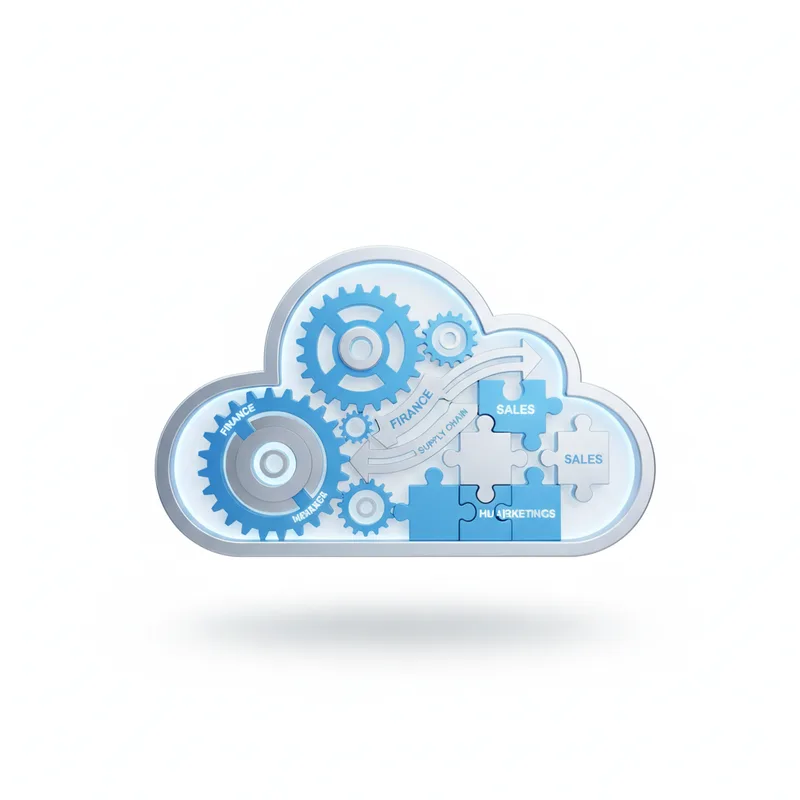
Cloud ERP systems integrate all core business processes, including finance, human resources, manufacturing, supply chain, services, procurement, and sales, into a single, unified system. By consolidating data into a centralized database, it eliminates information silos between departments. For instance, when a sales representative enters an order, the production, inventory, and finance teams can view it instantly. This integration minimizes manual data entry errors and empowers decision-makers with real-time insights.
Understanding how cloud ERP works requires looking at its underlying technical architecture. Unlike legacy systems, where the business is responsible for maintaining the hardware and software, a cloud ERP provider handles all system upgrades, security patches, hardware maintenance, and data backups. This shifts the technical burden away from your internal IT department, allowing them to focus on core business strategies.
Security is often the primary concern for businesses considering a move to the cloud. However, modern cloud ERP providers offer state-of-the-art security measures that far exceed what most individual companies could afford to implement on-premise. Data is protected using enterprise-grade encryption (such as AES-256), multi-factor authentication (MFA), advanced firewalls, and continuous security monitoring. Furthermore, reputable cloud providers comply with strict international data protection standards, including GDPR and ISO 27001.
From a technical standpoint, cloud ERP models are typically deployed as either multi-tenant or single-tenant. In a multi-tenant architecture, multiple organizations share the same physical hardware and software infrastructure, though each customer's data is strictly isolated and secure. This model is highly cost-effective and ensures that software updates are rolled out automatically to all users simultaneously. Single-tenant architecture, on the other hand, dedicates a private cloud environment to a single company, offering higher customization options for large enterprises.
When choosing the right system for your organization, it is essential to compare traditional on-premise ERP with cloud-based solutions. The most apparent difference lies in the financial model: Capital Expenditure (CAPEX) versus Operational Expenditure (OPEX). On-premise ERP involves high upfront costs for purchasing servers, software licenses, database setups, and disaster recovery systems. In contrast, cloud ERP requires virtually no upfront infrastructure cost, operating on a predictable monthly or annual subscription fee.
Implementation speed is another critical differentiator. Setting up an on-premise ERP system can take months or even years, as it requires procuring physical hardware, installing software, and customizing code locally. Cloud ERP systems are deployed on pre-configured cloud environments, allowing businesses to go live in a fraction of the time. This rapid deployment enables companies to respond quickly to market shifts and scale their operations faster.
The rapid adoption of cloud solutions is driven by the significant operational and financial benefits they deliver. First and foremost, financial predictability helps businesses manage their cash flow efficiently. Instead of making massive capital investments, companies pay a subscription fee, making budgeting straightforward and lowering the barrier to entry for small and medium-sized enterprises (SMEs).

Secondly, operational mobility transforms how modern teams work. Field agents, sales representatives, and remote employees can access business-critical data in real time. For example, a sales rep visiting a client can check real-time stock levels, place an order, and generate an invoice on the spot. This responsiveness dramatically improves customer satisfaction and accelerates the sales cycle.
Thirdly, advanced data analytics and reporting empower leadership teams with data-driven decision-making capabilities. Cloud ERP systems consolidate data from all business units to generate real-time reports and interactive dashboards. Executives can monitor financial health, manufacturing efficiency, or inventory turnover instantly, allowing them to spot trends, predict demands, and mitigate supply chain risks before they impact the business.
Cloud ERP solutions are highly versatile and adaptable to almost any industry. However, certain sectors benefit immensely from their capabilities. In the e-commerce and retail sectors, inventory management, order fulfillment, and customer relationship management (CRM) are critical. A cloud ERP integrates all sales channels (e-commerce websites, physical stores, and online marketplaces) into a single system, preventing stockouts and double-selling.
In the manufacturing sector, material requirements planning (MRP), production scheduling, quality control, and shop floor management are vital. A cloud-based ERP tracks the entire production lifecycle from raw material receipt to final product shipment. Any delays or equipment failures are logged instantly, allowing managers to adjust schedules and minimize production downtime.
Other sectors, including logistics, professional services, construction, and healthcare, rely heavily on cloud ERP for project management, automated billing, procurement, and resource allocation. Organizations with multiple branches or global operations can consolidate their financial and operational data effortlessly, ensuring a single source of truth across all locations.
Choosing a cloud ERP system is a strategic decision that will shape your business operations for years to come. The first criterion to evaluate is how well the software aligns with your current processes and future growth plans. Look for a modular ERP system where you can start with essential modules (like accounting and inventory) and add advanced modules (like HR or manufacturing) as your business expands.
Integration capability is another critical factor. Your new ERP must communicate seamlessly with your existing tools, such as e-commerce platforms, payment gateways, CRM systems, and local e-transformation (e-invoice, e-ledger) portals. A system with robust APIs (Application Programming Interfaces) ensures automated data flow and eliminates manual data entry between systems.
The success of an ERP implementation depends heavily on user adoption. If the software has a cluttered, outdated interface, employees will resist using it, leading to inefficiencies. Choose a platform that offers a clean, intuitive, and modern user experience. Additionally, native mobile apps are essential to allow your workforce to manage tasks, approve workflows, and view reports while on the go.
ERP software is a core part of your daily operations, and you will eventually need technical support, custom reports, or training. It is vital to partner with a software vendor that offers reliable customer support, clear Service Level Agreements (SLAs), and deep knowledge of local tax regulations and accounting standards. A responsive, local support team can make a massive difference in resolving issues quickly.
Transitioning to a cloud ERP is more than just a software installation; it is a transformation of your business culture and processes. A successful transition requires a structured approach. The first step is a thorough business process analysis, where you document your current workflows, identify bottlenecks, and define what you expect the new system to solve.
The second step is data cleansing and migration. Over time, legacy systems accumulate duplicate, incomplete, or outdated data. Before migrating to the cloud, this data must be thoroughly cleaned, formatted, and verified. Migrating high-quality, accurate data is crucial to ensuring your new ERP system produces reliable reports from day one.
The third step is comprehensive user training and testing. Your staff must be trained on how to use the new system effectively. Running a pilot phase allows you to test the ERP against real-world business scenarios, identify any issues, and make necessary adjustments before going live. Once testing is complete and the staff is confident, you can successfully transition to the live cloud environment.
As technology continues to evolve, cloud ERP systems are becoming smarter. The integration of Artificial Intelligence (AI) and Machine Learning (ML) is transforming ERPs from passive data repositories into proactive business assistants. These intelligent systems can analyze historical data to predict future trends and automate routine tasks.
For instance, an AI-powered cloud ERP can analyze historical sales data, seasonal trends, and external market factors to recommend optimal inventory levels, preventing overstocking or stockouts. It can also scan financial transactions to identify anomalies, detect potential fraud, and automate complex accounting entries. Combined with IoT (Internet of Things) sensors on the factory floor, the ERP can predict machine failures and schedule preventive maintenance automatically.
These advancements allow businesses to move from a reactive management style to a proactive, predictive model. The virtually unlimited processing power and storage capacity of the cloud make running these advanced AI algorithms fast and cost-effective, paving the way for smarter, automated business operations.
If you are ready to take the next step in your digital transformation journey, optimize your business processes, and prepare your business for the future, explore Uniesoft's modern, flexible, and user-friendly ERP solutions. Contact our expert team today to discuss how we can move your operations to the cloud and drive sustainable growth for your business.
Get in touch with our expert team for software solutions tailored to your needs.


 English
 Türkçe